
Our programs

Three strategic pillars—one connected household lens.

Health is our entry point. Household and community conditions shape what we do next, and partners from many sectors help deliver it.

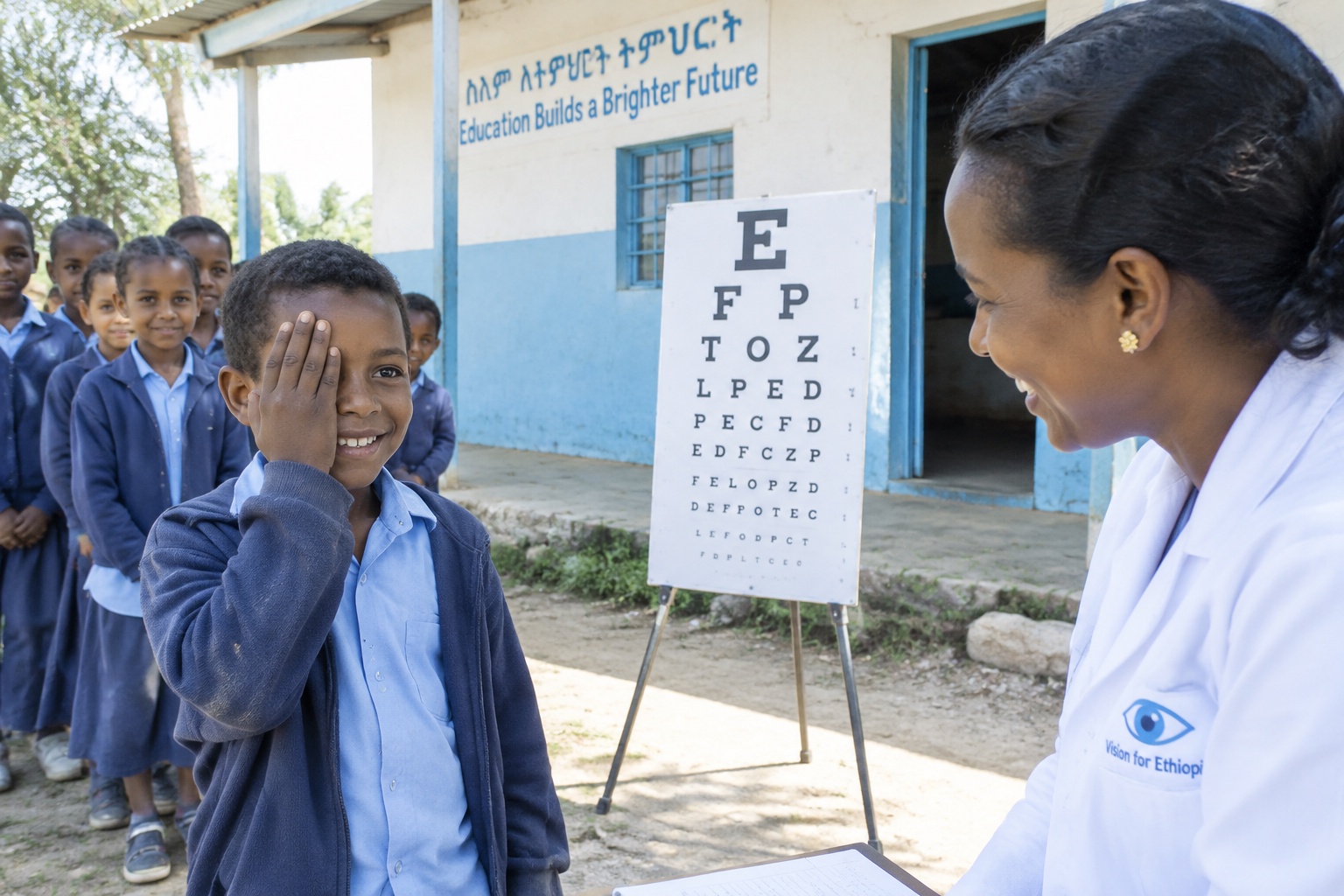
School vision screening in Ethiopia

Pillar 01

Integrated Community Health & Well-being

Community health promotion and prevention, NCD risk awareness and referral, eye-health pathways, nutrition-related prevention and better connection to existing primary health care.

  • Community health promotion

    Co-designed priority messages, group and household sessions, linked with existing health structures.

  • Household health navigation

    Identify access barriers, share service information and support consent-based referral follow-up.

  • School eye-health pathway

    Qualified screening for refractive error, clear results for families, and referral to assessment and spectacles.

  • Near-vision & NCD risk pathway

    Community education and protocol-based identification for adults, with qualified assessment, referral and follow-up.
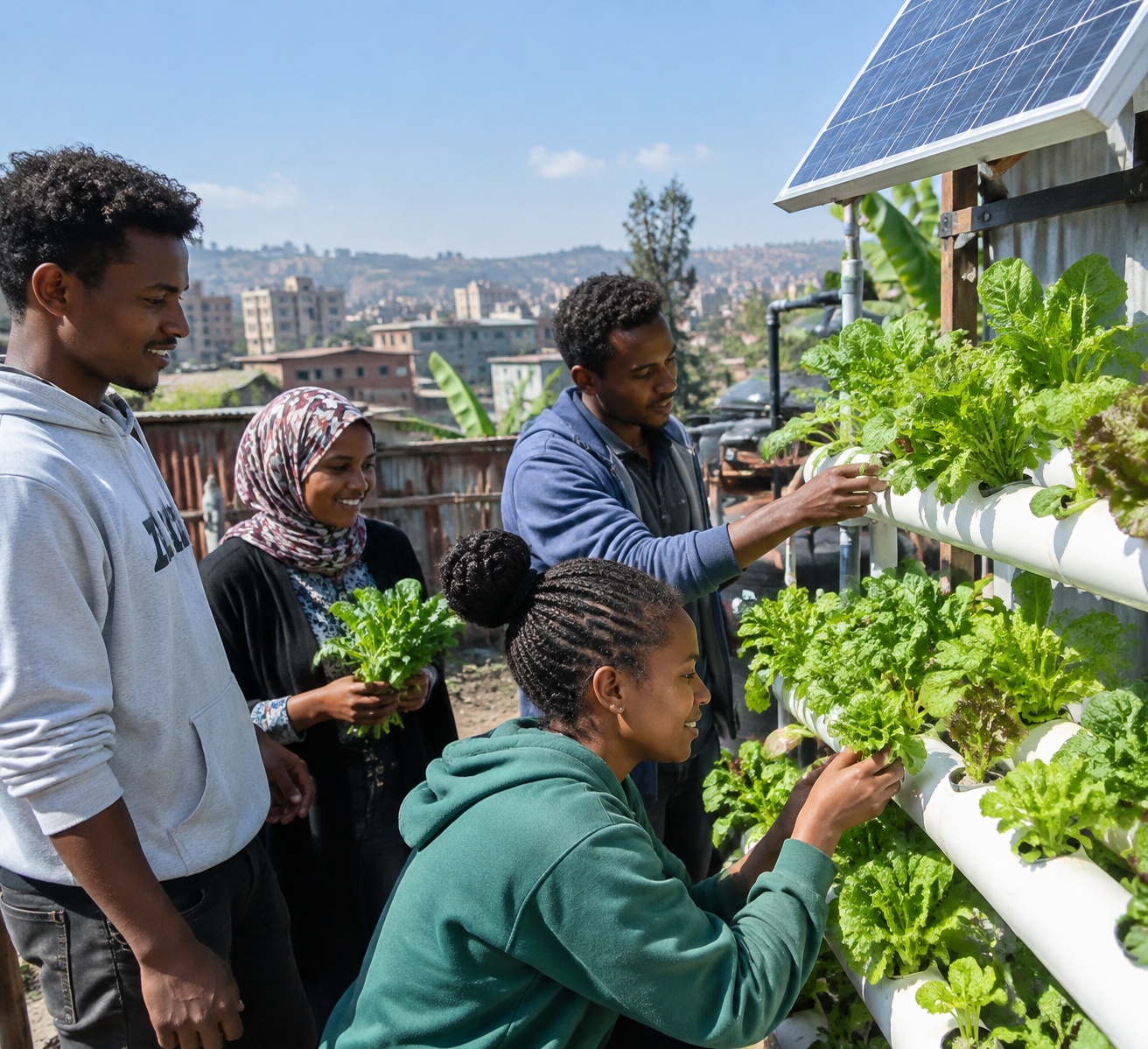
Young people working in an urban hydroponic garden

Pillar 02

Household Resilience & Sustainable Livelihoods

Participatory identification of livelihood constraints and links to skills, agricultural extension, savings, markets and enterprise services—followed up to see what is adopted and sustained.

  • Livelihood readiness & skills

    Match interests with local demand, connect to qualified training, mentor and follow up at 3, 6 and 12 months.

  • Enterprise & employment pathways

    Map employers and value chains; link to internships, jobs, enterprise support or responsible digital work.

  • Food & nutrition resilience

    Practical nutrition education and links to locally appropriate food production and existing services.

  • Financial & social support linkages

    Map and refer to existing financial inclusion, social protection and livelihood services.

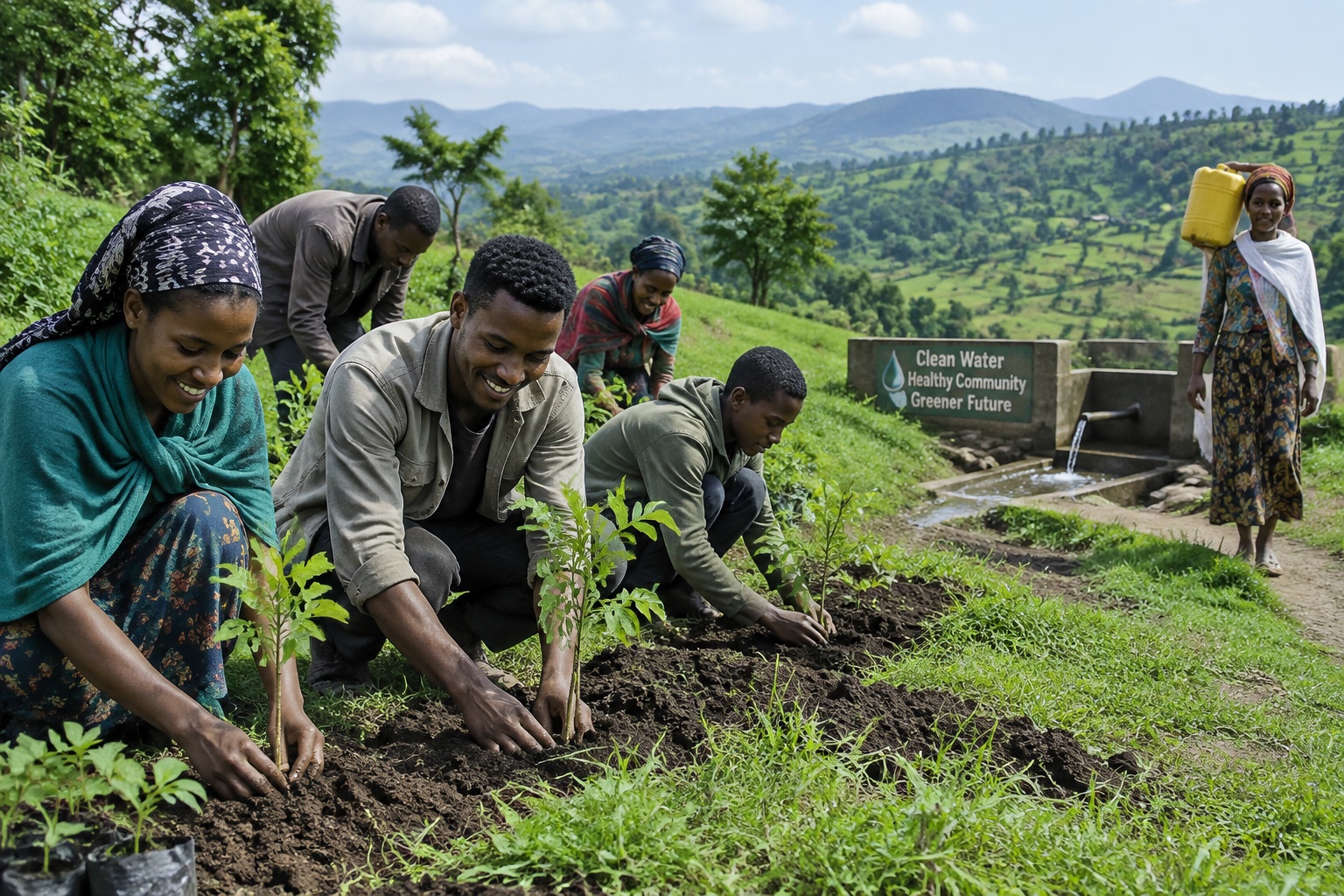
Community tree planting near a water point

Pillar 03

Healthy Environments & Community Resilience

Household and community WASH, environmental health awareness, locally appropriate waste and sanitation solutions, and climate- and environment-sensitive community action.

  • WASH & environmental health

    Participatory risk identification, hygiene promotion and coordinated technical WASH improvements with maintenance plans.

  • Greening & seedling establishment

    Suitable species and sites, shared planting and care responsibilities, survival monitored at 6 and 12 months.

  • Climate & local resilience

    Identify locally relevant risks and co-design feasible preparedness or adaptation actions.

Sectoral focus areas

Where our first programs take shape.

Following licensing, MEKLIT is preparing these core cross-sectoral interventions, each with a clear first milestone.

Digital capacity & innovation

Training on ethical digital use, digital health data tools and inter-sectoral communication dashboards for front-line workers.

First milestone: Digital capacity curriculum aligned with Ministry of Innovation and Technology guidelines.

Youth & professional income generation

Digital freelancing, tech-assisted remote work, extra-hour income schemes and green enterprise incubators for unemployed youth and health personnel.

First milestone: A pilot cohort of 50 youth in tech remote-work readiness.

Health & well-being (core anchor)

Community health screenings, maternal and child care tracking, elderly care, and mental health and addiction-recovery referrals.

First milestone: Primary screening referral pathways in a pilot woreda.

Agriculture & climate resilience

Urban agriculture (hydroponics and vertical gardens), solar-powered irrigation and community afforestation.

First milestone: A demonstration plot for urban hydroponics and solar irrigation.

Cross-sectoral network & interoperability

Digital and procedural links between health, agriculture and finance for seamless information sharing and holistic support.

First milestone: A joint inter-sectoral referral mechanism.

Opportunities to co-design

Potential investment opportunities.

Illustrative areas for co-design with partners. Final pilot packages are agreed after consultation, technical review, partner mapping and costing.

Community eye health

School-age refractive error screening with referral and continuity of care—linking screening, clinical assessment, affordable correction and follow-up.

Presbyopia & NCD touchpoints

Integrated community screening and referral pathways for adults.

Household resilience

Participatory identification of livelihood, food security and household priorities.

Healthy environments

Locally designed WASH and environmental health improvements.

These are opportunities to explore and validate together—not commitments to launch all activities. Regulated and specialist services are always delivered by qualified, authorized providers.

Cross-cutting enablers

What makes every program work.

Participatory research & human-centred design

A documented problem-analysis and co-design cycle for every new flagship intervention.

Digital innovation

Tools used only where they solve a defined problem, with attention to connectivity, accessibility, data security and cost.

Community engagement & accountability

Communities help set priorities, monitor quality and shape adaptation.

MEAL

Monitoring, evaluation, accountability and learning built into delivery.

Safeguarding, gender & social inclusion

Do-no-harm practices, protection and inclusive participation throughout.

Partnership management

Clear roles, agreements and performance follow-up with every partner.

Partner with MEKLIT to turn local priorities into measurable, connected solutions.

Co-design · Co-finance · Co-learn · Co-scale. The next step is a joint scoping conversation on one place and one or two clearly defined household problems.